• 0 Posts
  • 27 Comments
Joined 3 years ago
cake
Cake day: June 12th, 2023

help-circle


  • It uses it’s own crypto. It’s not really a crypto -currency- in the sense that it’s meant to be used for payment or to store value. It’s more of a crypto -token- that’s meant to provide some limited utility in it’s ecosystem. Like an arcade token in an arcade, you can use it to play the games but that’s about it. Likewise the session token can be used to get some extra functionality within the network, like registering custom names on it’s dns like service that can be used to add new contacts instead of the long default user hash or as a stake if you want to run a node. The functionality is fairly limited right now but the devs plan to expand it soon. People also sometimes use these kind of tokens as a stock of sorts, so if the service/network becomes popular the value of it’s “stock” can grow so it can be used as an investment (personally I wouldn’t recommend that but whatever floats your boat [not a financial advice btw]). The node operators profit from selling these tokens to whomever wants to buy them.


  • Tor relays only relay the traffic, they don’t store anything (other than HSDirs, but that’s miniscule). Session relays have to store all the messages, pictures, files until the user comes online and retrieves them. Obviously all that data would be too much to store on every single node, so instead it is spread across only 5-7 nodes at a time. If all of those nodes ware to go offline at the same time, messages would be lost, so there has to be some mechanism that discourages taking nodes offline without giving a notice period to the network. Without the staking mechanism, an attacker could spin up a bunch of nodes and then take them all down for relatively cheap, and leave users’ messages undelivered. It also incentivizes honest operators to ensure their node’s reliability and rewards them for it, which, even if you run your node purely for altruistic reasons, is always a nice bonus, so I don’t really see any downside to it, especially since the end user doesn’t need to interact with it at all.


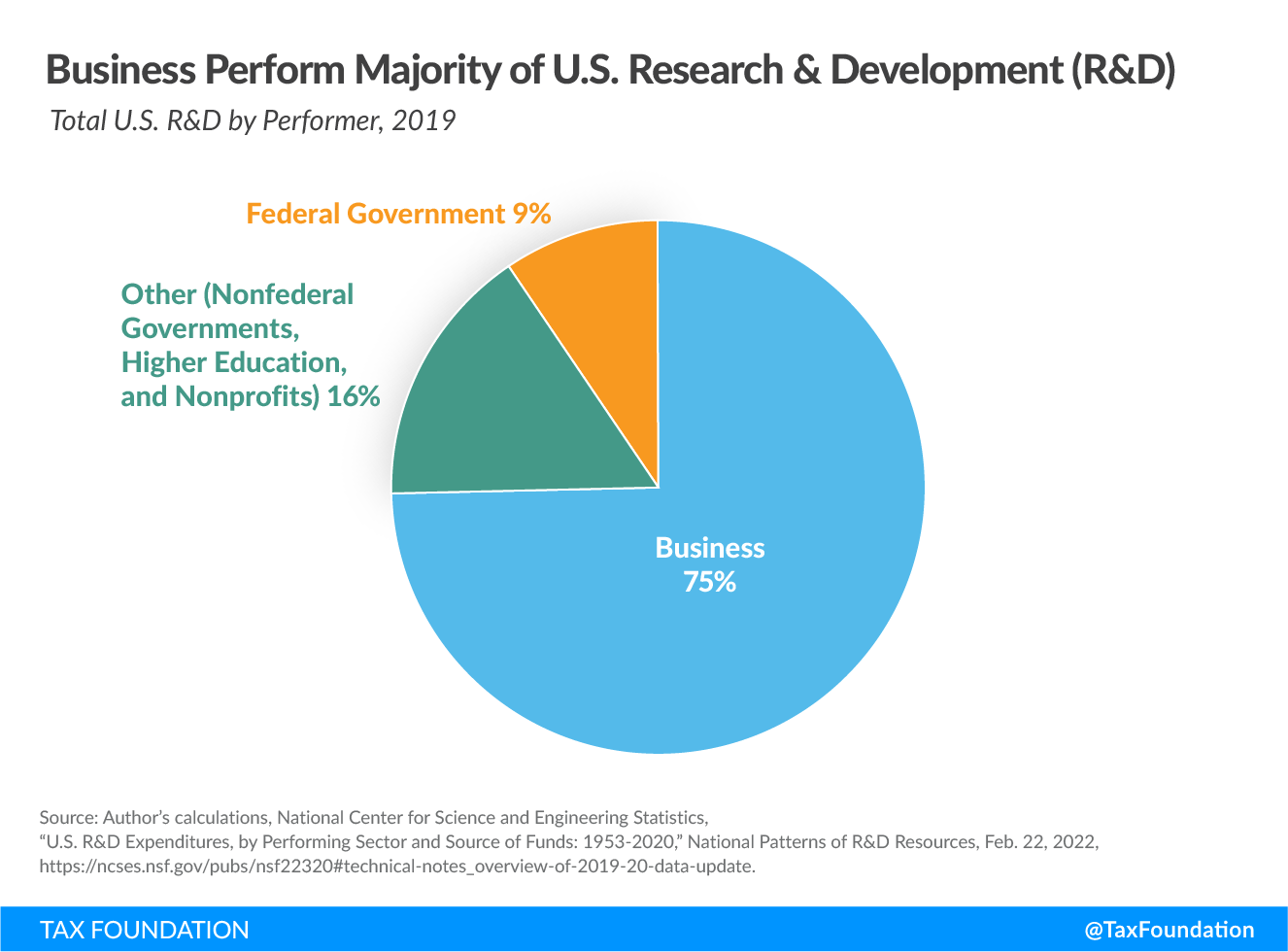
  • In 2019, the U.S. invested $667 billion in R&D. The private sector is responsible for most R&D in the United States, in 2019 performing 75 percent of R&D and funding 72 percent

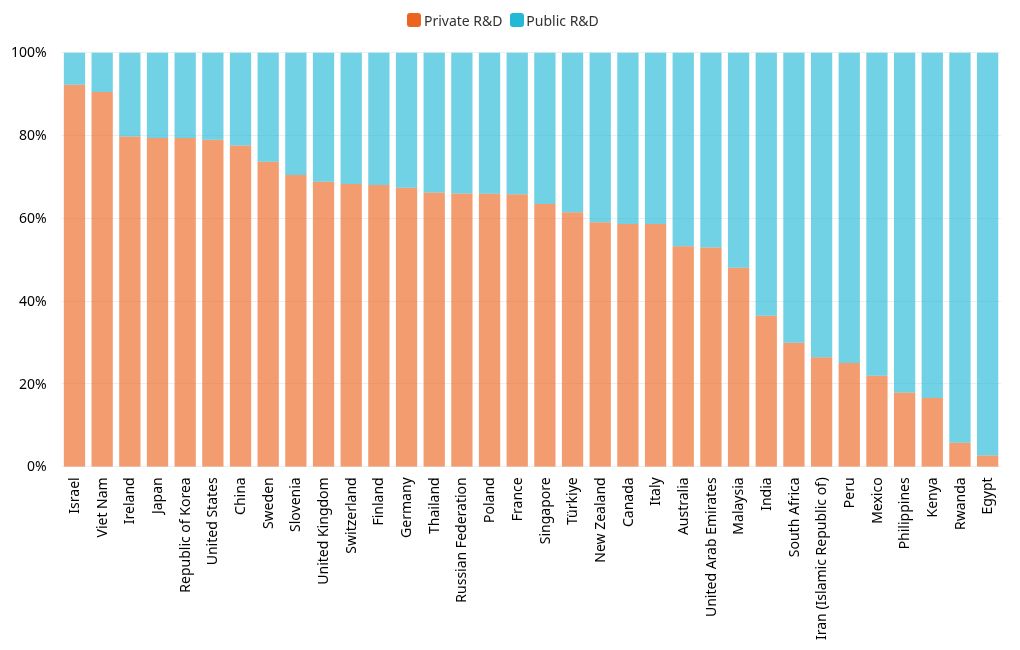
    In some economies, the private sector overwhelmingly drives R&D. Israel leads the way, with the private sector responsible for 92% of total R&D, followed by Viet Nam (90%), Ireland (80%), and both Japan and the Republic of Korea (79%). The private sector also plays a significant role in the US, China, several European economies, Thailand, Singapore, Türkiye, Canada, Australia, the United Arab Emirates, and others, where it contributes over half (50%) of total R&D. source

    source

    The business sector is the largest funder of R&D in the top R&D-performing countries, with lower shares funded by government, higher education, and private nonprofit institutions. In each of the leading R&D performers in East and Southeast Asia—China, Japan, South Korea, and Taiwan—the domestic business sector accounted for at least 75% of R&D funding in 2021. source

    In order to maintain a monopoly you have to keep innovating and offering a quality service, otherwise there there will be a 100 startups waiting to take your place if you ever give them an in. The most dangerous monopolies are created by government regulations, bureaucracy and bailouts.

    Starship has ~150 tons payload capacity, if made fully reusable you only have to cover the fuel and operational costs, fuel is ~1 mil for a LEO launch so $6.66 per kg + operational costs, so the $10 per kg figure isn’t too far off.


  • qwerty@discuss.tchncs.detoTechnology@lemmy.world*Permanently Deleted*
    link
    fedilink
    English
    arrow-up
    2
    arrow-down
    1
    ·
    6 months ago

    Governments: spend 80 years developing space tech with public funding, allowing humanity to walk on the moon, have global positioning satellites, and essentially kickstart the computing industry from a necessity to build computers for orbital calculations

    Yes, government funded endeavors are sometimes the only way to do things that don’t have a clear ROI but they are also incredibly inefficient and as such should be kept only until it becomes viable for the private sector to take over.

    Private companies: *mostly disappear and waste shareholder money, like Virgin or like Bezos’ attempts at space

    That’s the beauty of the private sector, pure meritocracy, if you suck - you die. If those were public initiatives they would have been kept regardless of the costs or the results, wasting the taxpayer’s money instead of the shareholders’.

    one company with public funding raking in those 80 years of publicly-funded research to itself

    If it was that easy NASA or all the failed companies you mentioned would have done it themselves. SpaceX has done an absolutely incredible job at innovating in the industry that has been in stagnation since the 80s, designing rapidly reusable rockets, lowering the cost per kg to LEO from $72k in today’s money, from the space shuttle days to $2500 and planing to reduce it to $10 with starship.

    The public funding part doesn’t mean free money from the government, the government pays SpaceX for fulfilling contracts because NASA can’t do it themselves, at least not as efficiently as SpaceX. Right now majority of SpaceX’s revenue comes from starlink which mainly serves private consumers so it’s reliance on the government contracts is being overstated.

    underpaying and exploiting its engineers

    SpaceX $155K-$247K/yr ($117K - $175K/yr base pay + $39K - $72K/yr stock)

    NASA $113K - $158K/yr

    lowering the costs at the expense of safety due to cutting in safety measures thay will never be tolerated when humans ride those rockets

    As of 2025, SpaceX is the only U.S. company with a human-rated rocket system certified by NASA for regular flights to the International Space Station. NASA completed the certification of SpaceX’s Crew Dragon spacecraft and Falcon 9 rocket in 2023, marking the first time a commercial system was certified for human spaceflight.

    Dumbass liberal lemmitor: pRiVaTe Is ClEaRlY sUpErIoR

    Yes.


  • qwerty@discuss.tchncs.detoTechnology@lemmy.world*Permanently Deleted*
    link
    fedilink
    English
    arrow-up
    2
    arrow-down
    1
    ·
    edit-2
    6 months ago

    Government agency starts multiple, multi-year, billion dollar projects, delays ensue, costs overrun, results are unimpressive. It has to rely on private contractors or other countries for the most basic things, spends $211 billion for a space shuttle program that goes nowhere and ends up costing $0.5 billion per launch.

    Private company goes from nothing to a successful rocket launch in 10 years for less than $1 billion, half of which is private funding. In the next 10 years makes rockets reusable, lowers the cost to orbit by 30x, launches a viable commercial service people are willing to pay for.

    Communists on lemmy:

    Capitalists on Lemmy: private company is better just because it’s private


  • qwerty@discuss.tchncs.detoTechnology@lemmy.world*Permanently Deleted*
    link
    fedilink
    English
    arrow-up
    2
    arrow-down
    4
    ·
    6 months ago

    Have a government run space agency, government constantly cuts funding. Awards contracts to incompetent military company to build over priced rocket. Crony capitalism and money disappears.

    That government guy sure seems incompetent, I hope no one puts it in charge of a space company.

    Private guy steals all NASA talent from budget cuts builds talented team, innovates new technologies for rockets

    That private guy sure seems like he knows what he’s doing, I bet he’d be great at running a space company.

    and then goes full blown Nazi and you love him even more.

    IDK where that’s coming from, I never said that, you’re just making stuff up now.