- 18 Posts
- 15 Comments





 5·3 months ago
Chromium builds don’t have built-in automatic updates, and they’re missing DRM and some other proprietary components that are important. I’ve seen some community-maintained builds with varying update methods, but they don’t seem as well-supported as relying on Google/Microsoft/Vivaldi/whatever.
I used desktop Linux as my daily driver for years, I am aware it exists.
Yes, I suggested Vivaldi in the article.
LibreWolf doesn’t help me with websites that refuse to work properly on Firefox’s engine. I mentioned in the article that Firefox is already my daily web browser, but I’ve been looking for a good backup Chromium browser for that and other reasons.
I don’t think he is talking about specifically businesses, though, because he also talks about Gemini replacing Google Assistant, which only matters in consumer products (Assistant was never an enterprise product). It’s more like he’s moving the goalposts mid-statement.
If the models are more efficient, the tasks that still need a server will get the same result at a lower cost. OpenAI can also pivot to building more local models and license them to device makers, if it wants.
The finances of big tech companies isn’t really relevant anyway, except to point out that Ed Zitron’s arguments are not based in reality. Whether or not investors are getting stiffed, the bad outcomes of AI would still be bad, and the good outcomes would still be good.
I wrote the article, Ed said that in the linked blog post: “There Is No Real AI Adoption, Nor Is There Any Significant Revenue - As I wrote earlier in the year, there is really no significant adoption of generative AI services or products.”
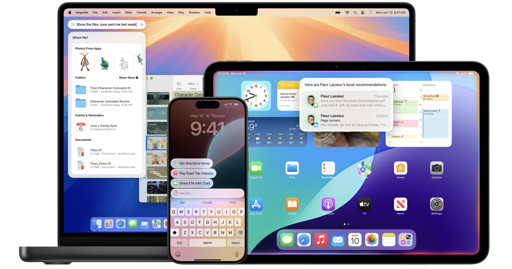
There is a pretty clear path to profitability, or at least much lower losses. A lot more phones, tablets, computers, etc now have GPUs or other hardware optimized for running small LLMs/SLMs, and both the large and small LLMs/SLMs are becoming more efficient. With both of those those happening, a lot of the current uses for AI will move to on-device processing (this is already a thing with Apple Intelligence and Gemini Nano), and the tasks that still need a cloud server will be more efficient and consume less power.
I wouldn’t really trust Ed Zitron’s math analysis when he gets a very simple thing like “there is no real AI adoption” plainly wrong. The financials of OpenAI and other AI-heavy companies are murky, but most tech startups run at a loss for a long time before they either turn a profit or get acquired. It took Uber over a decade to stop losing money every quarter.
OpenAI keeps getting more funding capital because (A) venture capital guys are pretty dumb, and (B) they can easily ramp up advertisements once the free money runs out. Microsoft has already experimented with ads and sponsored products in chatbot messages, ChatGPT will probably do something like that.

Nice, I’ll add that to the to-do list.
Yeah, some Rust code from Servo was integrated a few years ago as the article explains, mainly the CSS engine.


Not really, even the cheap phones have large screens now. There’s no correlation anymore between price and screen size, the cheap phones just have lower quality panels.


Seemingly only in Japan, though.

Steam only being 32-bit isn’t improving compatibility, it’s being lazy. You can write code that works on both architectures for the best performance and compatibility across all PCs, like Chrome, Firefox, MS Office, etc.

I mostly use Mastodon, but I 100% get it. The onboarding process is much easier with centralized services (no need for analogies to email), and more importantly, you’re not at risk of losing half your follows/followers when server admins have a pissing match. As long as those friction points exist, there will be a market for centralized platforms.


I haven’t noticed a website outright blocking Firefox in a while, in part because Firefox devs are staying on top of it with overriding a lot of site blocks. The issue I run into the most is reduced video quality in Google Meet in Firefox, so I switch to Safari or Chromium when I need to do calls there.